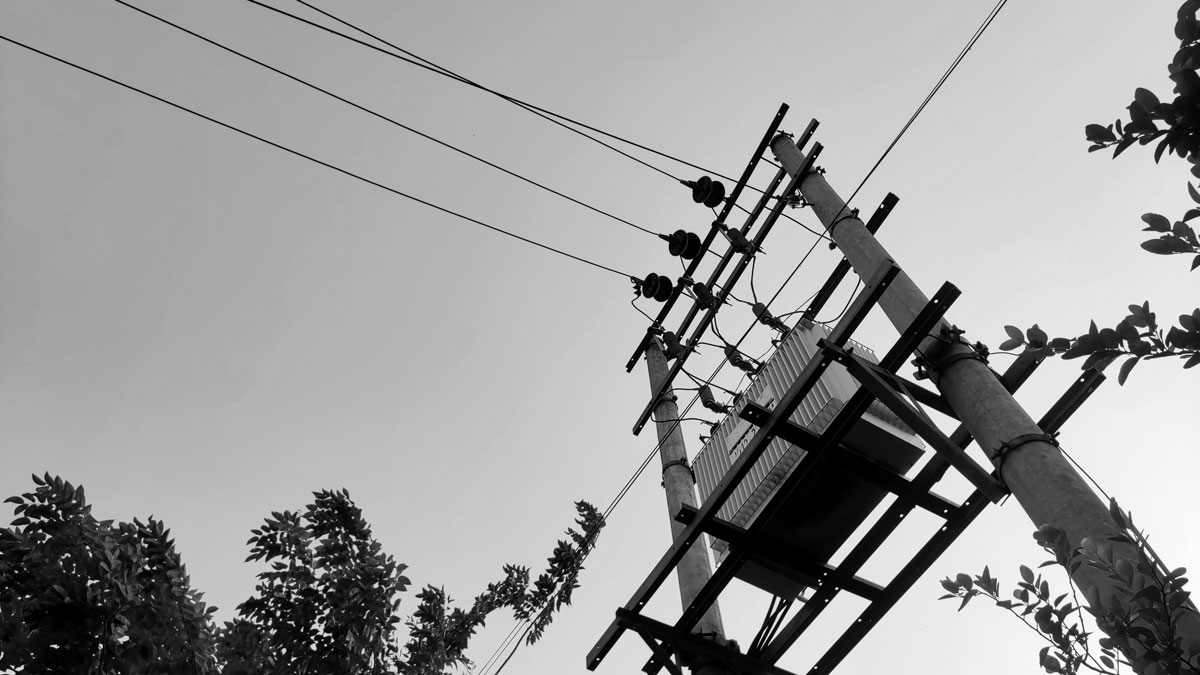
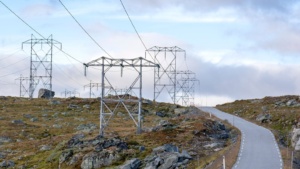
One solution is to understand how we can use the infrastructure we already have more effectively. With better knowledge of the grid’s actual state and the components’ operational limits, we can in many cases postpone reinvestments and reduce new expansion without compromising on security of electricity supply. These are issues we are address in FME SecurEL.
Read about methods for planning and operating the grid:
Making better use of the power grid requires research in several areas. In SecurEL, the focus is on the distribution grid. Some of the Centre’s objectives are to understand what happens in the electrical grid, where it happens, and how it affects the components. An important aspect is also to investigate how this knowledge can and should be used in practice. To achieve this, we must address several challenges:
- We need robust methods for estimating the operating state of the grid. By operating state, we mean calculating currents, voltages, and switching topologies with high enough accuracy to detect and locate faults.
- We need to understand how component conditions change over time. We must quantify how different load patterns and environmental conditions affect ageing and failure probabilities for critical grid components such as cables, transformers, and switchgear.
- We need effective systems in place to manage faults when they occur. The methods must be adapted to a more dynamic grid, which becomes even more important when more renewable generation and power electronics are integrated into the power grid.
- We need sound strategies for using the information we have about component condition and risk to prioritise maintenance and reinvestment. We must translate insights from generated gathered from research into practical strategies that maintain high security of supply in a complex grid with limited resources.
What will we do in SecurEL to solve these challenges?
Under the umbrella of “optimal utilisation of components and systems”, we develop the methods and knowledge needed to use the power grid and its components more effectively with a known and acceptable risk. The work is organised around four main tracks:
1. Modelling and assessment of components:
We investigate different methods for assessing the health condition of components to understand how loading and environmental conditions affect the risk profile over time. We also develop models that remain relevant as operating conditions change—for example with more variable loads, increased use of power electronics, and new insulation materials.
2. State estimation of components and systems:
We explore how currents, voltages and topology in the distribution grid can be calculated when information and measurement points are limited. We also investigate how physical and virtual sensors can be used to provide improved snapshots of temperature and loading in critical components.
3. New concepts for protection, control and automation:
Increased use of converters can challenge existing protection principles. We therefore develop fault-management methods that suit future grids. One example is work on using geometric algebra for fault detection:
- Towards Fast Fault Detection in Power Systems with High Level of Renewable Generation: a Differential Geometry Approach
- Understanding the Geometry of Faulted Power Systems under High Penetration of Inverter-Based Resources via Ellipse Fitting and Geometric Algebra
Protection and control systems are increasingly being digitalised to handle rapid changes in the power system. In this context, we also take a closer look at how modern technologies such as artificial intelligence, edge computing, and virtualization can be used.
4. Risk- and condition-based maintenance and renewal:
Here, we work on linking information on condition, degradation and failure probabilities to make better decisions on maintenance and reinvestment. The goal is to develop more condition- and risk-based strategies and thereby ensure that measures are implemented where they give the greatest benefit.
The way forward
In the coming years, we will work closely with the user partners in SecurEL to ensure that our research addresses real needs and challenges in the distribution grid. We will test how new sensors and digitalisation solutions can be used to improve state estimation, assessment of component health, asset management, and protection. A key objective is to build a bridge between components and systems, so that research conducted at the component level can be applied in practical operation, maintenance and reinvestment decisions.
To enable rapid learning and relevance, SecurEL is organised in a way that allows for both long-term piloting and shorter sprints (so-called proof-of-concepts). Two pilot projects related to components and protection are already under way, and several relevant proof-of-concepts have been completed or are planned.
Education of researchers and students is also an important part of SecurEL. Through the work described above, we will contribute to educating students by offering relevant MSc projects. In the first phase of the project period, two PhD positions linked to research on components and protection have already been advertised. This represents an important contribution to building the competence that the industry will require in the years to come.


Comments
No comments yet. Be the first to comment!