





Recommendations
- Invest in smart grids and utilise flexibility in production, consumption and storage. Prioritise research and development on digital and automated solutions, and on using flexibility to increase capacity quickly while reducing environmental impact.
- Modernise operational criteria. Transition to more flexible, risk-based grid operation that makes better use of capacity and provides a more balanced trade-off between security of supply and cost.
- Enable local energy communities. Provide incentives for consumers, producers and local communities to contribute with local generation and flexibility to support the power grid.
- Improve incentive structures. Develop regulations and price signals that reflect real costs and distribute them fairly, supporting more efficient use of the grid.
- Ensure resilience in power supply. Strengthen knowledge on how changes in the energy system affect supply security, improve risk understanding, reduce vulnerabilities, and enhance preparedness through cooperation both nationally and across borders.
Current situation
With increasing electrification, both Europe and the world face major challenges in ensuring a resilient, flexible and sustainable electricity supply. The power grid will be the backbone of the future energy system and will require large-scale investment and modernisation to connect vast amounts of renewable and distributed generation, as well as new electricity demand in industry, transport and other sectors, as part of efforts to reduce greenhouse gas emissions.
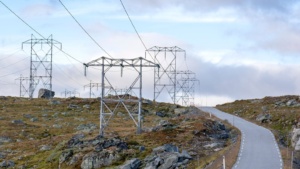
According to DNV, global grid capacity needs are expected to increase by a factor of 2.5, with annual investment requirements more than doubling by 2050. The growing share of variable generation from wind and solar increases the need for flexibility to balance supply and demand. Today’s grid infrastructure often lacks sufficient capacity to connect large new loads or to integrate variable renewable power, leading to bottlenecks, higher prices, limited grid access and a greater risk of power outages.
Electrification with new renewable generation and changing consumption patterns also leads to new operational challenges and increased stress on both the power system and its components. Climate change increases the likelihood of natural disasters, while geopolitical tensions pose new threats to energy supply through both physical and digital attacks and vulnerable supply chains.
The global energy system is becoming more complex with renewable sources, digitalisation, and the emergence of new actors such as flexibility providers and local energy communities. Delayed grid development and capacity constraints can slow the transition to a low-emission society and threaten the achievement of climate goals. Overall, new risks, increased complexity, uncertainty and unpredictability heighten the need for stronger resilience in the energy system.
Solution
The solution lies in developing a smarter, more flexible and more robust power grid. Digitalisation and automation enable real-time monitoring and control of grid operations. Using sensors, data-driven decision systems and artificial intelligence, we can optimise operations, prevent failures and increase capacity without large physical expansions.
The current conservative N-1 security principle — used by all European system operators — requires redundancy to handle the failure of a single component. This approach should be complemented by more flexible, risk-based criteria that balance security of supply with socio-economic costs.
We must also promote local solutions that harness flexibility resources. Flexible generation, storage and consumption — from individual users or local energy communities — can help balance the system, reduce bottlenecks and free up grid capacity. Such solutions also promote local value creation and reduce pressure on the central grid.
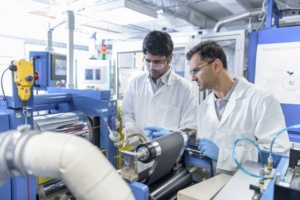
It is equally important to develop sustainable grid components — such as switchgear, cables and transformers — that can withstand renewable generation, battery charging and more extreme weather, while being produced with lower use of critical raw materials.
Global electricity demand is expected to double by 2050, and massive investments in new grid infrastructure are planned worldwide. Increasing capacity in existing networks will therefore be essential. By digitalising the grid, adopting new technologies and exploiting flexibility, it is possible to boost capacity in today’s networks by at least 20–25 %.
Resilience in the power supply requires a solid understanding of how changes in the energy system affect security of supply. This demands comprehensive risk assessments, actions to reduce vulnerabilities and strengthened preparedness. Coordinated efforts between authorities, industry and research institutions — both nationally and internationally — will be crucial to achieve this.





Comments
No comments yet. Be the first to comment!