






Recommendations
- Strengthen North Sea cooperation. Expand the North Seas Energy Cooperation (NSEC) to enable coordinated development of offshore wind and related offshore grids.
- Ensure predictability. Introduce annual licensing rounds for new offshore areas to provide stable and long-term conditions for the industry.
- Require innovation. Include obligations for research, development and competence building in licensing and support schemes.
- Share measurement data. Require developers to make collected data available for research and technological advancement.
- Develop the power system. Expand grid connections both offshore and onshore to enable efficient integration of offshore wind with hydrogen, hydropower and other renewables and storage.
- Plan infrastructure. Establish frameworks for long-term investments in essential infrastructure such as ports, cables and service vessels.
Current situation
Offshore wind currently accounts for a small share of global wind power capacity, but its potential is enormous — several times greater than today’s total global electricity consumption. Offshore wind can be developed near major population and industrial centres and often entails fewer land-use conflicts and less environmental impact than onshore wind.
Rising costs and profitability pressures pose challenges for the offshore wind sector. While the cost of offshore wind fell sharply until just a few years ago, it has since increased — in line with other energy technologies — as a result of the war in Ukraine and subsequent global economic disruption, including higher prices for raw materials, capital, and labour. Several major players have incurred significant losses, but the market is beginning to recover, and several successful auctions have recently been completed.
Floating offshore wind is still in an early development phase and remains more expensive than fixed-bottom technology, but its potential is substantial. Around 80% of the world’s offshore wind resources are located in waters too deep for bottom-fixed structures, making advances in floating technology critical — both for Norway and internationally. Gaining more experience with floating wind projects, costs will go down by learning, innovation and scaling.
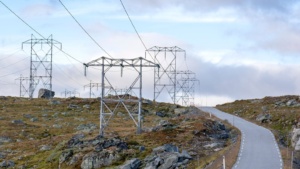
To realise offshore wind ambitions, the power system must also adapt. New transmission infrastructure is needed — both offshore and onshore — to integrate offshore wind with other renewable energy sources, hydrogen and hydropower. At the same time, careful consideration of nature and coexistence with other marine sectors must underpin development.
Solution
Onshore wind has grown into a large-scale industry, installing over 100 GW of new capacity annually. Achieving a comparable build-out rate for offshore wind is fully possible — but it requires industrial and supply chain development, infrastructure expansion, and competence building. Environmentally responsible design will be a prerequisite for sustainability and a key competitive factor going forward, ensuring that offshore wind deployment respects both ecosystems and communities.
In Europe, the North Sea countries aim to increase installed offshore wind capacity from 30 GW at the end of 2022 to 300 GW by 2050. This could reduce emissions by up to 1,000 million tonnes of CO₂ if offshore wind replaces coal, or about 500 million tonnes if it replaces natural gas. Total investments are estimated at around EUR 1 trillion, representing an immense opportunity for Norwegian and international supplier industries.
Long-term predictability is essential. The industry needs stable frameworks and clear signals about future licensing rounds in order to invest in manufacturing capacity. Auctions that focus solely on price per kWh may drive down costs but do not necessarily promote innovation or sustainable solutions. Award criteria should therefore also include requirements for research collaboration, technology development and open data sharing.
A strong, coordinated effort on research, innovation and education is a prerequisite for achieving offshore wind ambitions. Knowledge, new technology, efficient solutions and a skilled workforce are critical success factors. Leading European research institutions, in collaboration with major industrial actors, have highlighted two particularly important research priorities[ii]: floating offshore wind and large-scale grid integration of offshore wind power.
The vision is for offshore wind to become a backbone of the future energy system — developed with respect for nature and society, delivering prosperity through clean and affordable energy for all.






Comments
No comments yet. Be the first to comment!