Electricity generation from coal represents respectively 41% and 30% of the world and European electricity generation. CCS is considered to be a promising way to reduce CO2 emissions, and CO2 capture from coal power production can decrease the climate impact of power generation across the world.
As part of the BIGGCS FME centre, promising technologies for CO2 capture such as membrane are been investigated. As part of this work, a new approach to design and optimize membrane based CO2 capture, called the “attainable region approach”, which lead to more energy and cost efficient processes has been developed by Karl Lindqvist, Rahul Anantharaman, and Simon Roussanaly from SINTEF Energy Research.
New approach
Based on this work, SINTEF have initiated a collaboration with Carnegie Mellon University (Pittsburgh PA, USA) which is one of the top US universities. The aim of this collaboration is to use the new approach developed by SINTEF to identify the membrane properties required to obtain membrane based CO2 capture processes which are able to compete in term of cost with commercial technology.
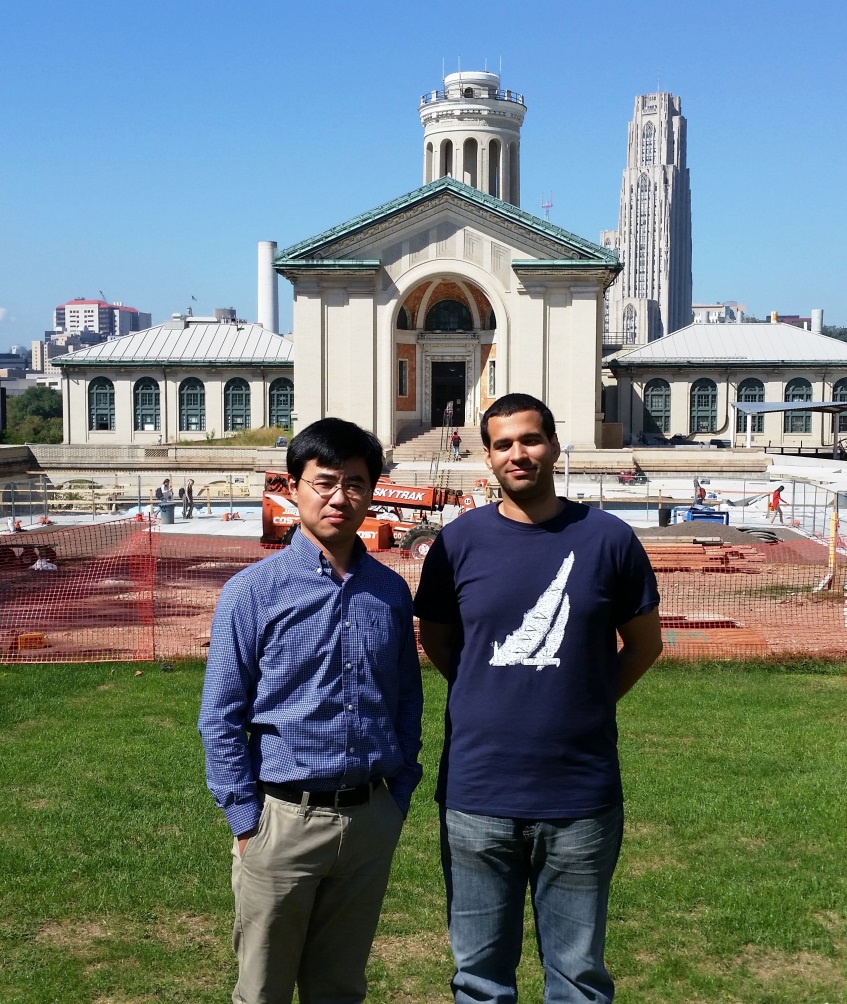
As part of this collaboration Simon Roussanaly, Researcher at SINTEF Energy Research, is currently visiting for 7 weeks Haibo Zhai and Edward Rubin who are professors at Engineering and Public Policy department of Carnegie Mellon University. The results of the collaboration will be presented at the 2015 Pittsburgh Coal Conference and will results, as well as in a journal article.
The authors would like to thank both the BIGCCS FME centre and the CLIMIT program for their contribution and financial support necessary to the realisation of the collaboration and research visit.

Comments
No comments yet. Be the first to comment!