
The climate crisis has reached a point where cutting emissions is no longer enough – we must also actively remove CO2 from the atmosphere. This process of storing CO2 permanently, known as Carbon Dioxide Removal (CDR) or ‘negative emissions,’ can be achieved through various natural and technological methods.
With the urgent need to deploy and scale these solutions, we should balance future potential with present performance – biochar belongs at the center of the near-term effort.
Growing the CDR market is essential for negative emissions
Over the past few years, a new CDR market has emerged to drive negative emissions by linking CO₂ emitters with CDR projects through the trade of carbon removal credits. While most transactions have taken place on the voluntary carbon market, the EU’s new Carbon Removal and Carbon Farming (CRCF) Regulation is now creating a regulatory backbone for credible and scalable certification.
This market is incredibly important as global CO₂ emissions continue to rise year after year, and 2024 was the first year we officially passed the 1.5 °C mark above pre-industrial levels – despite the Paris Agreement, where 195 parties pledged to limit warming to well below 2 °C and ideally keep it around 1.5 °C.
Fortunately, the global CDR market has been growing at an unprecedented pace. In 2024, nearly 8 million tonnes of carbon dioxide removal credits were purchased or retired – a 78 % increase compared to 2023. In the first half of 2025, the market was said to have doubled within just three month.
While there is still a huge gap between the CDR credits sold on the market and those actually delivered, the amount of CO2 that is removed and stored has steadily increased, reaching almost 330,000 tons last year, more than double the CO2 removed in the previous year.
Behind these impressive numbers lies a surprising market driver: biochar.
Biochar: Available, dependable, and investor-friendly CDR
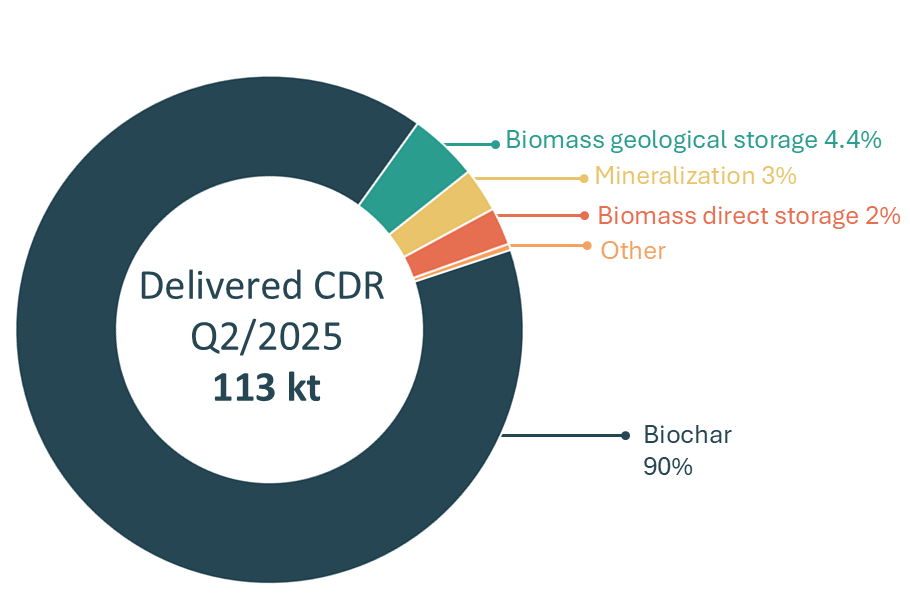
There are numerous CDR methods available today, ranging from natural approaches like planting new forests to technological solutions such as bioenergy with carbon capture and storage (BECCS) and direct air capture (DAC). While DAC and BECCS often dominate the headlines, biochar has quietly emerged as the workhorse of durable carbon removal. In fact, in 2024, more than 90% of all delivered CDR credits came from biochar projects.
This could be explained with the following four reasons:
1. Biochar is available now
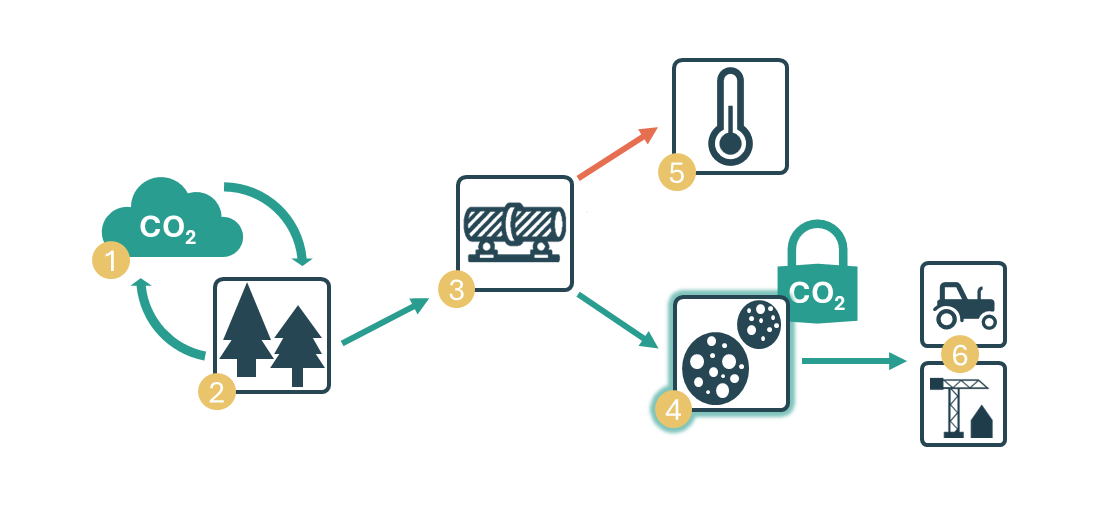
Unlike some emerging solutions, which remain at pilot or early demonstration stages, biochar leverages existing biomass and pyrolysis technologies. This makes it deployable today, with the potential to scale quickly. Biochar production can start at small scales and grow modularly, without the huge investments required for other technological CDR options.
On the CDR market, the time between order and delivery of biochar-based CO2 removal is 5 months on average. All other solutions need at least six times as long to deliver.
2. Not just good for CDR
Unlike other technical CDR solutions, where the removal of carbon dioxide is the sole goal, biochar comes with added benefits. It can improve soil fertility, water retention, crop yield, especially in degraded or sandy soils. It can also be used for environmental remediation, cleaning contaminated lands. Biochar is the only CDR technology that can simultaneously eliminate waste.
3. We know it works
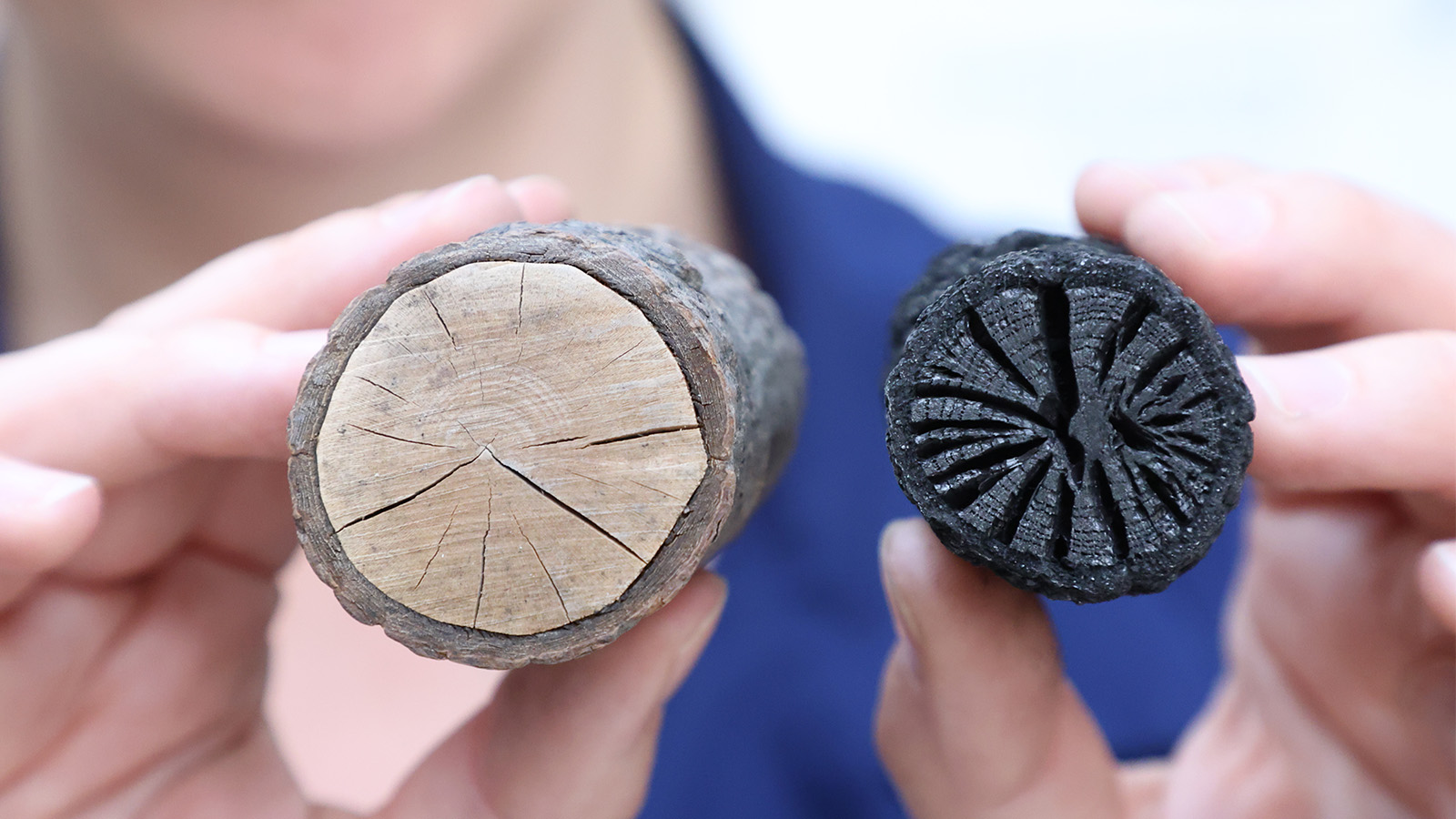
Carbon in biochar is highly stable, persisting for hundreds to thousands of years. The monitoring, reporting, and verification (MRV) frameworks for biochar are relatively mature, making biochar-based carbon credits more trustworthy.
4. Investors believe in biochar
Because of its durability and additional benefits, biochar credits are considered trustworthy, creating strong demand from buyers. They typically sell at higher prices than nature-based avoidance credits, while remaining more affordable than many other durable CDR options.
Bioenergy is the conversion of biomass into heat and/or secondary fuels such as synthesis gas, liquid fuels, or biochar. When producing heat, the most natural choice is ‘direct combustion’, i.e. burning. This ranges from the cozy warmth of a wood-fired stove in your house or cottage, to using residues like waste wood or household waste (with a high biomass content) in waste incineration plants. While the image of biomass combustion has suffered in recent years due to e.g. its similarities to fossil fuels combustion, burning biomass is in comparison an environmentally smart choice – because it is based on renewable biomass resources and therefore recycles carbon already circulating in the biosphere.
The future of CDR
While biochar is leading the growth of the CDR market today, it is not a silver bullet. The scale of carbon removal required in the coming decades will be enormous, and the longer temperatures remain above the limits set by the Paris agreement, the more we need to rely on CDR.
No single method can therefore deliver this alone. Point-source emissions from industries such as cement, steel, and chemicals will inevitably persist, and here CCS and DAC will be essential to achieve net zero. Countries must ensure that their climate strategies reflect the full range of solutions and not miss out on market drivers.
In Norway today, CCS receives strong political and financial support as it is an essential climate technology. Biochar deserves a similar level of recognition as it has proven its worth. Globally, it already accounts for the vast majority of carbon removal credits, and it combines permanent storage with additional benefits for soils, waste management, and the circular economy.
If Norway wants to position itself at the forefront of carbon removal, biochar must be treated as a strategic pillar – a solution that is scalable now, internationally validated, and capable of delivering durable results.






Comments
An excellent summary. Thanks! We are scaling up. We will have produced 4000 Carbon removal credits by the end of this year and will be producing over 20000 per year by 2030. All from Local Government pyrolysis units.