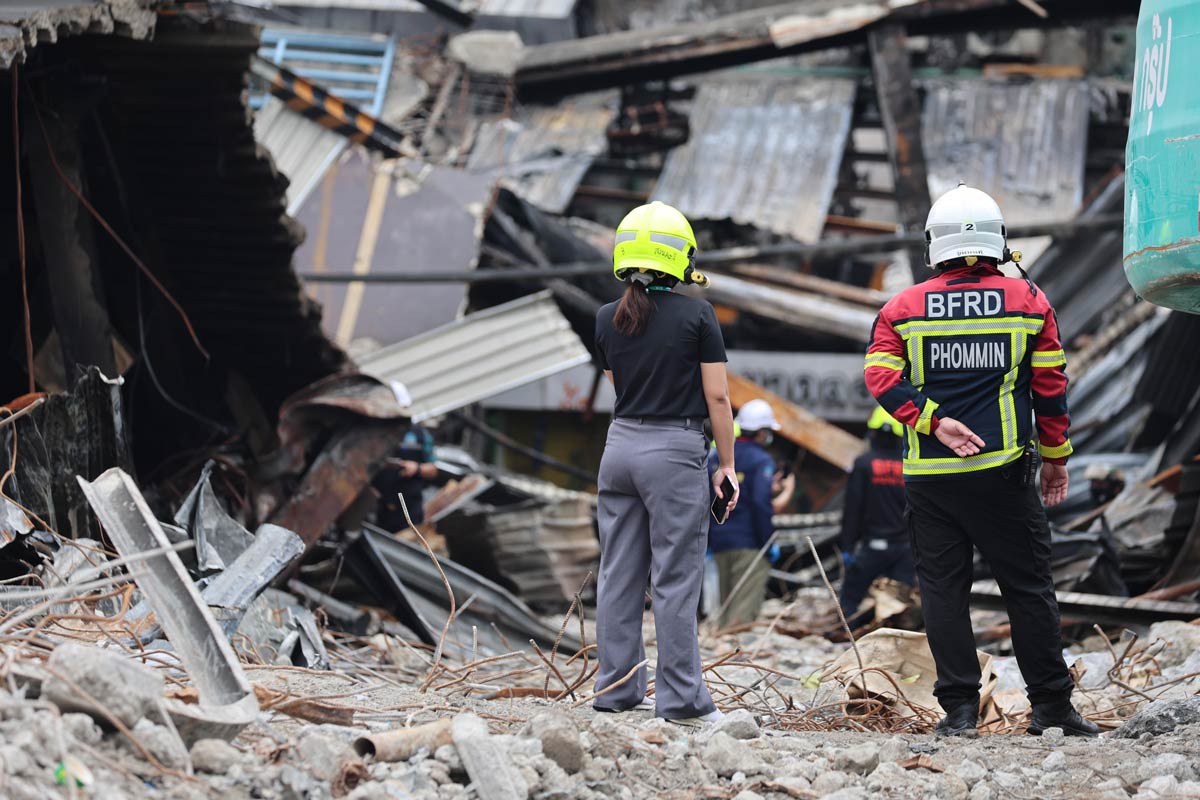


In August 2026, a catastrophic flood struck Nepal. Triggered by a dramatic ice and rock avalanche in the Himalayas, the flooding along the Trishuli and Bhotekoshi rivers claimed more than a thousand lives, caused extensive damage to infrastructure and had enormous consequences for society. Hundreds of thousands of people were affected, and major transport routes, power plants and local communities were destroyed or cut off.
The disaster shows why Nepal needs its own research communities that can understand and manage events like this, and why building knowledge in the Himalayan region must be a long-term effort. For more than three decades, KU, NTNU and SINTEF have built a partnership that has grown from traditional university and research cooperation into a central platform for capacity building, innovation and sustainable development. The cooperation has helped educate several generations of Nepali engineers, establish world-leading research infrastructure and develop local expertise in hydropower, hydraulics, sedimentation, climate adaptation and renewable energy.
The story began in the 1990s with discussions between KU’s Vice-Chancellor Suresh Sharma and Inge Johansen, former Rector of the Norwegian Institute of Technology (NTH), about establishing an engineering faculty modelled on NTH. In the early 2000s, KU and SINTEF followed up with a dialogue on how applied research could contribute to industrial development and technological self-reliance in Nepal. This led first to the RenewableNepal research programme and later to EnergizeNepal, a consortium of KU, NTNU, SINTEF and HydroLab funded by the Norwegian government. The programme has since supported six research centres, 23 R&D projects, more than 360 researchers and students, 136 scientific publications and more than 100 institutions in Nepal.
The results are tangible. Through the Turbine Testing Laboratory and HydroLab, Nepali researchers and their colleagues from NTNU and SINTEF have developed new knowledge about sediment management, erosion-resistant turbines, flood conditions, tunnelling technology and the operation of hydropower plants under the demanding conditions of the Himalayas. Research scientists at KU have also built up expertise in ecohydraulics, fish passage and climate-adapted infrastructure. Many of these topics are directly relevant now that Nepal must understand and deal with the consequences of increasingly extreme floods and accelerating climate change in the Himalayas.
What have three decades of cooperation achieved in practice? Lieve Olufsen explored this question in her master’s thesis at NTNU, which looked at international cooperation in education and research. She concludes that the cooperation has made an important contribution to system-level capacity building in Nepal. Over time, it has helped develop not just individuals but also institutions, research communities and industrial expertise that today form the backbone of Nepal’s hydropower sector. A key finding is that continuity and mutual trust have mattered more than individual projects and short-term results.
Now that Nepal is facing the human and economic consequences of the floods, the cooperation is about more than energy. It is about Nepali institutions and research communities having the capacity to understand risk, develop robust solutions and manage the consequences of a rapidly changing climate themselves. Research on sediment transport, flood hydrology, geotechnics, resilient infrastructure and the ability to predict and warn of severe events is no longer a purely academic matter but a prerequisite for public safety.
Monica Rolfsen, Pro-Rector Outreach and Social Responsibility at NTNU, puts it this way: “Technology cooperation is not about giving away technology, but about building societies.”
In the face of future climate-related and natural disasters, perhaps the most important result of the cooperation between KU, NTNU and SINTEF is precisely this: not the laboratories or the technology alone, but the people, the expertise and the institutions that leave Nepal better equipped to meet the challenges ahead.
Both NTNU and SINTEF have made cooperation with countries in the Global South a priority in their recent strategies. The long history and positive development of the cooperation between Kathmandu University, NTNU and SINTEF have laid the foundation for formalising and strengthening the relationship between the institutions further. KU and NTNU recently signed a cooperation agreement with a particular focus on technology development, health and medicine, and entrepreneurship. The agreement aims to build strong links between academia and local industry, and to support the sustainable development of skills and society.
NTNU and SINTEF will now work closely with Kathmandu University to achieve the goals of the agreement. Through joint research and innovation activities, the partners aim to develop long-term partnerships that strengthen knowledge exchange, capacity building and technology development for the benefit of both Nepal and the Norwegian partners. This will help ensure that the strong, mutually beneficial cooperation between the institutions continues to develop.
From disaster to resilience
The flood disaster has made it clear that climate change is no longer a future scenario for Nepal but a reality already affecting people, local communities, energy supply and economic development. Prime Minister Balendra Shah blamed the disaster on climate change:
“There is no doubt that this disaster has occurred due to climate change. Climate change is a global contribution, and its response is also a global responsibility.” The Himalayan Times, 2 September 2026.
At the same time, the disaster underlines the importance of the knowledge and capacity built through decades of cooperation between KU, NTNU and SINTEF. Through this cooperation, Nepali institutions have built stronger research communities, greater technological expertise and a foundation for meeting future challenges with their own institutions and experts.
What is needed now is not just reconstruction, but a more robust and sustainable society. Professor Bhola Thapa, former Vice-Chancellor of KU and now Vice-Chancellor of Tribhuvan University, points out that this also applies to hydropower:
“Nepal needs to strengthen the resilience of its hydropower infrastructure against increasingly unpredictable climate-induced disasters. Existing hydropower projects should adopt robust early-warning systems, emergency protocols, staff training and preparedness measures, while future projects must incorporate climate-informed design codes, risk criteria and resilience measures to remain safe and functional under increasingly extreme conditions.”
The disaster is also a reminder that climate change is not only about physical infrastructure. Biraj Singh Thapa, university director at KU, highlights the human dimension:
“Climate-induced disasters are creating a less visible but profound mental-health crisis in Nepal. When homes, livelihoods, infrastructure and entire communities are destroyed, people can lose not only their physical security but also their social networks and sense of belonging; therefore, climate resilience must include long-term mental-health support, psychosocial care and mechanisms for rebuilding communities.”
Climate resilience must therefore encompass technology, society and people. At the same time, the green transition opens up new opportunities. This is the focus of Narayanhari Rijal, chair of NTNU Alumni Nepal:
“Nepal’s response to climate change must go beyond adapting to disasters and accelerate the transition towards a low-carbon economy. Creating an enabling environment for entrepreneurship, digital innovation, and new businesses in renewable energy, green industry, and other energy-transition sectors can turn climate action into an opportunity for sustainable economic growth while reducing future emissions.”
For decades, the cooperation between KU, NTNU and SINTEF has shown that long-term partnership is about far more than technology development and research projects. It is about developing people, institutions and societies that can deal with uncertainty, manage crises and create new opportunities. In light of the flood disaster, this long-term investment in knowledge and capacity seems more important than ever.







Comments
No comments yet. Be the first to comment!