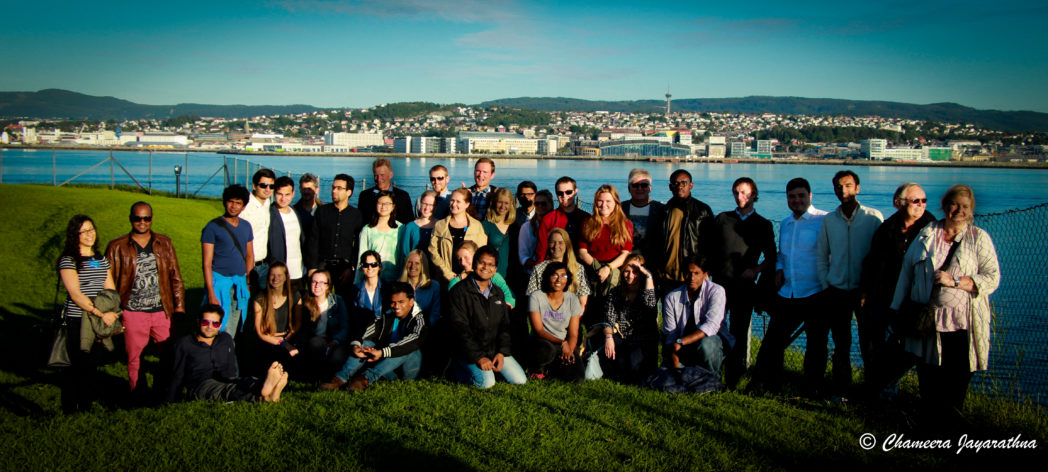
The summer school attracted 29 CCS students from all the five Nordic countries and Europe. It was a very diverse group with 15 nationalities represented. The diversity ensures a distinct international impact.
The summer school is an important tool in building CCS expertise. In order to achieve CCS deployment there is a need to integrate public information with education and outreach.
Successful implementation will require hiring, training and retaining a large workforce of skilled professionals to design and operate facilities in order to enhance Nordic industry competitiveness.
Benefits from Nordic collaboration
The positive synergies and benefits from Nordic collaboration on CCS implementation have been shown by the good results from the NORDICCS project where innovative results have been presented including cost estimations of CO2 ship transport and Industrial CCS case studies through the NORDICCS Roadmap and The Nordic CO2 Storage Atlas to be issued this year. This illustrates the importance of Nordic networking.
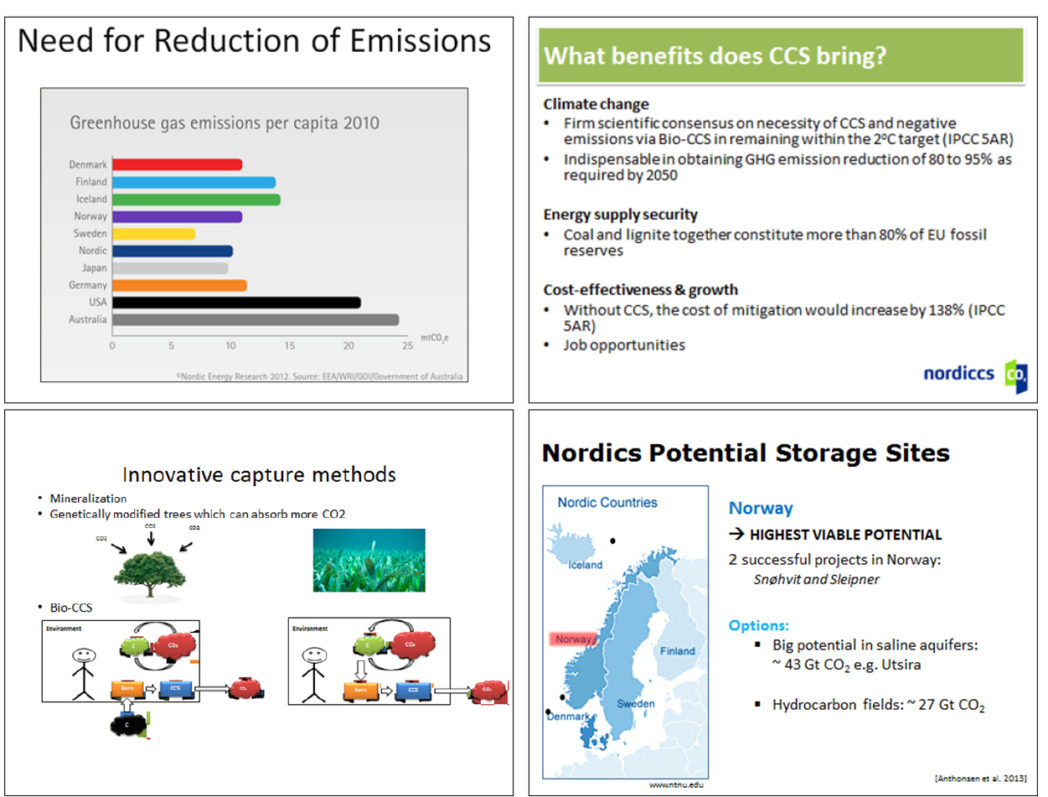
The summer school presentations covered the entire CCS chain from capture, transport and storage to framework issues such as financing, public acceptance, political and legal issues. See the programme.
Site visits: NORCEM and Yara
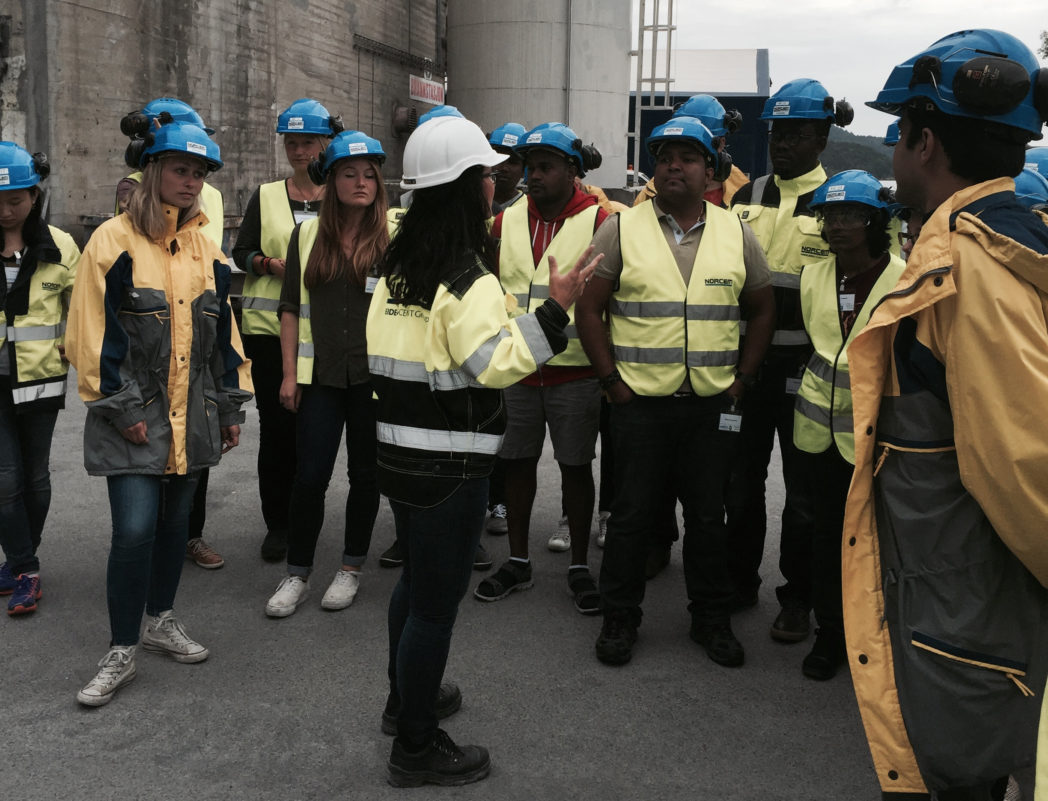
The course had a distinct industrial focus ensured particularly by site visits. The two only land-based industrial sites that have CO2 capture ongoing in Norway were visited. At the CO2 capture test facilities at the NORCEM’s cement plant in Brevik the students viewed the ongoing testing of one of the four different capture technologies currently in a testing program for CO2 capture from cement production.
The second visit was to Yara’s fertilizer production facilities in Porsgrunn where the complete CO2 chain was presented from CO2 capture and compresson to production of the liquid CO2 and the export site for liquid CO2 at Yara’s harbor facility, where it is shipped to Europe for use in food applications such as beverages and soft drinks. Yara currently produces about 200 000 tonnes of liquid CO2 annually for food production. NORCEM and Yara are also the two facilities highlighted in the recent Gassnova report to be potentially full-scale CO2 capture opportunities in Norway.
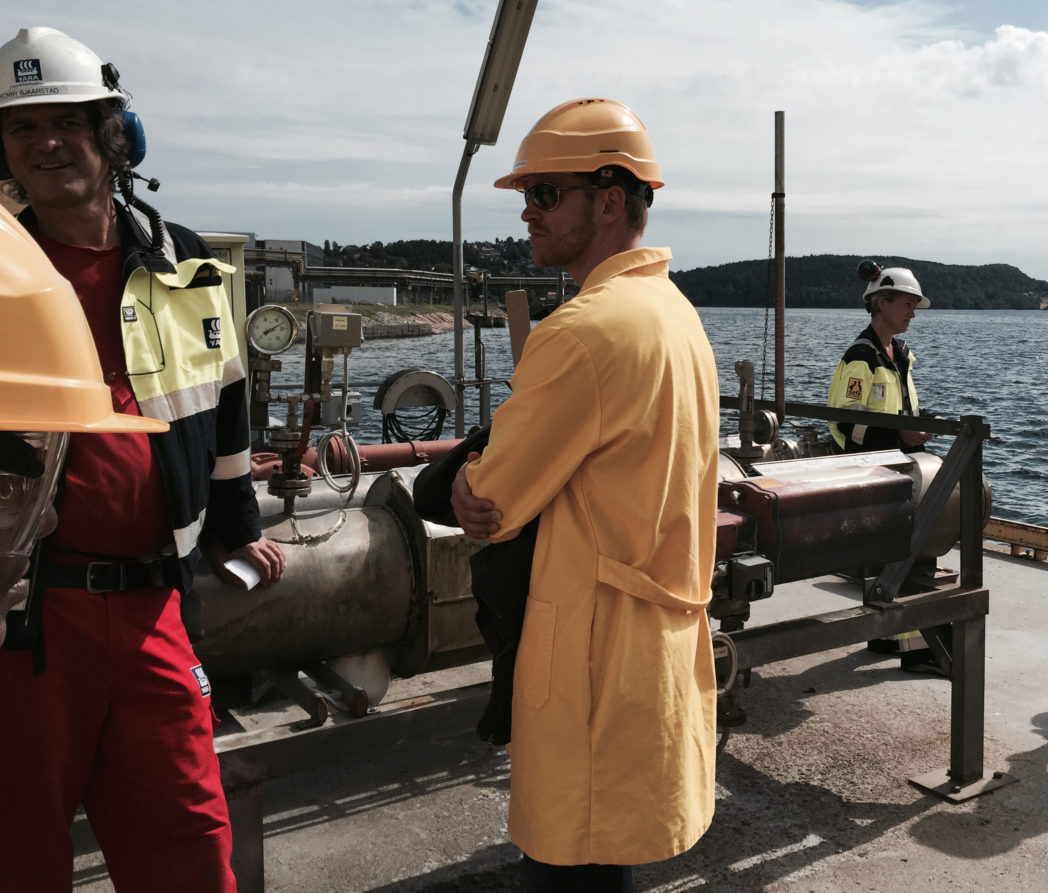
Yara currently produces about 200 000 tonnes of liquid CO2 annually for food production.
Communicating CCS
Communication of climate and research results is an important part of the course and there was three lectures addressing this issue. These lectures were also opened up to the public.
The first was Nils Røkke, Climate Director at SINTEF who discussed how CCS plays a role in the climate solutions. A very relevant topic in view of the upcoming COP21 meeting in Paris in December.
The next public speaker was Kikki Flesche Kleiven from the Bjerknes Centre for Climate Research at University of Bergen giving a lecture on Climate Changes. She presented geological as well as climate data to illustrate how real changes have already occurred both to our local Nordic as well as World climate due to the 0.86 C warming that has already occurred in the World’s average temperature since 1850 due to the burning of fossil fuels.
Per Espen Stoknes, a climate psychologist from the BI business school in Norway enlightened the class in how one builds public support for climate policy. The lecture was a summary of the theories set out in his recent book “What We Think about When We try Not to Think About Global Warming“.
Roadmap to Accellerate CCS
The students were divided in four groups each of which produced a Nordic CCS roadmap on how to accellerate CCS in the Nordic region as part of the exam to obtain 3 credit hours.
The summer school was financed by the Research Council of Norway, CLIMIT and the Nordic Top level research initiative through the NORDICCS project.



Comments
No comments yet. Be the first to comment!