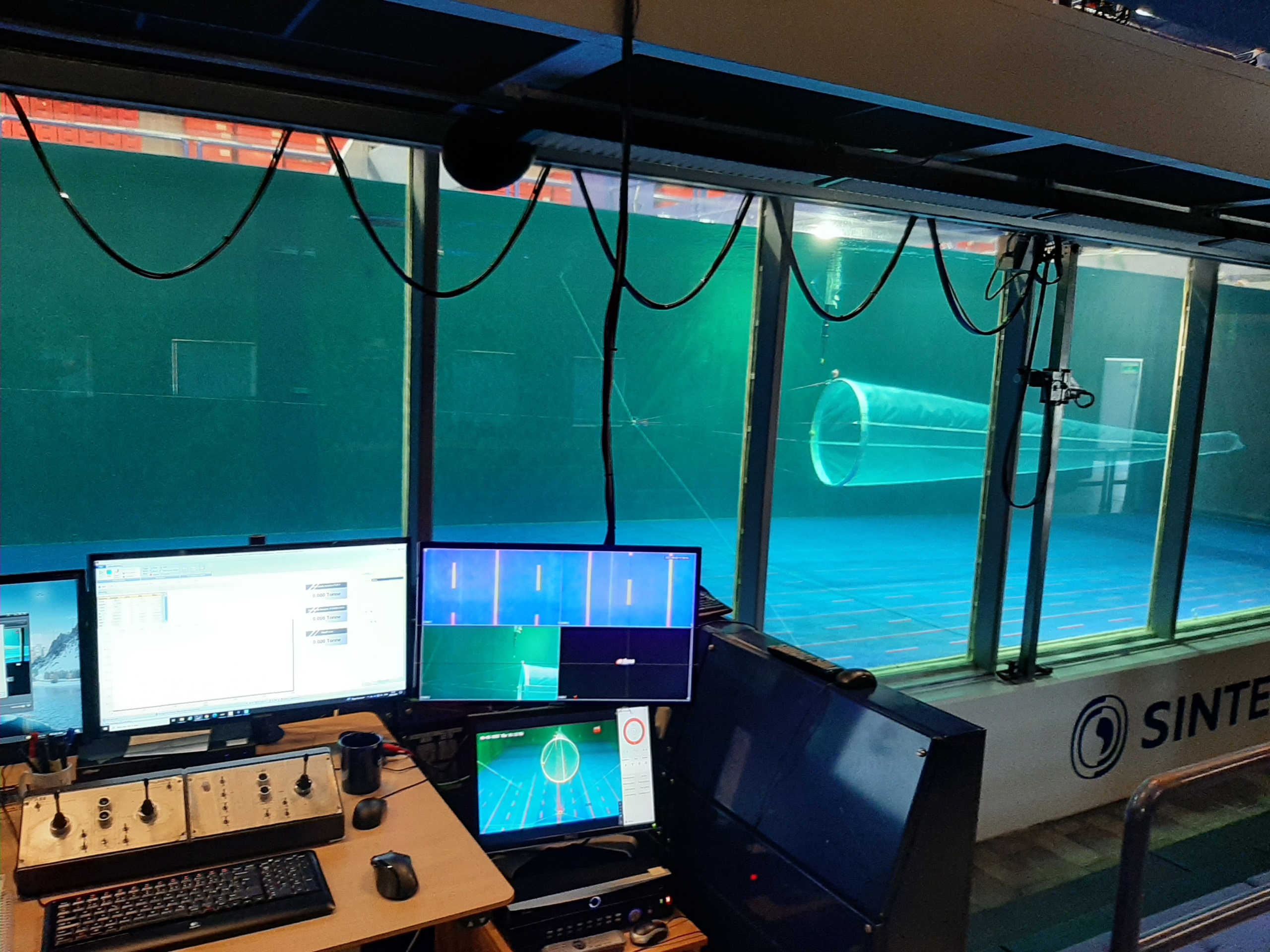

Fishing from the twilight zone
The mesopelagic zone, also called the ’twilight zone’, stretches from 200 to 1,000 metres deep. It holds some of the world’s largest but least exploited fish stocks. Species like pearlside and lanternfish dominate this layer, often occurring together with northern krill. In the North Atlantic, Calanus finmarchicus, a much smaller copepod, is also highly abundant and considered a valuable future resource.
Despite their differences in shape and behaviour, these species share one key trait: they’re small compared to traditional fishery target species. That means trawl nets must use very small meshes to retain them. Small meshes, however, cause high drag, making nets harder to tow and leading to higher fuel consumption for the fishing vessels.
To address some of these issues, we looked at how to optimise the fishing gear used for harvesting those low-trophic species.
Mesopelagic fish and krill
To look at how the mesh size affects the harvest efficiency of species such as pearlside, lanternfish, and krill in the North Atlantic, we studied the belly section and codend of the experimental trawl with mesh sizes of 14 mm, 20 mm, and 30 mm.
We found that codends are far more effective at size selection than belly sections, especially for krill, which also showed more frequent contact with the mesh panels, even when the mesh size was the same. It is important to understand this, because size selection occurs sequentially along the trawl body: losses in the belly reduce what reaches the codend, while belly mesh size also drives drag and fuel use.
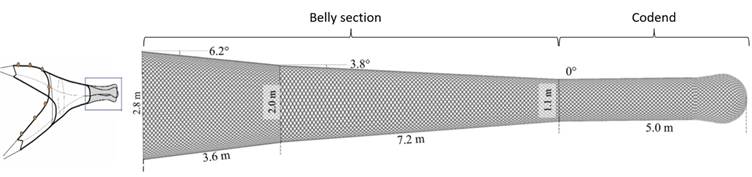
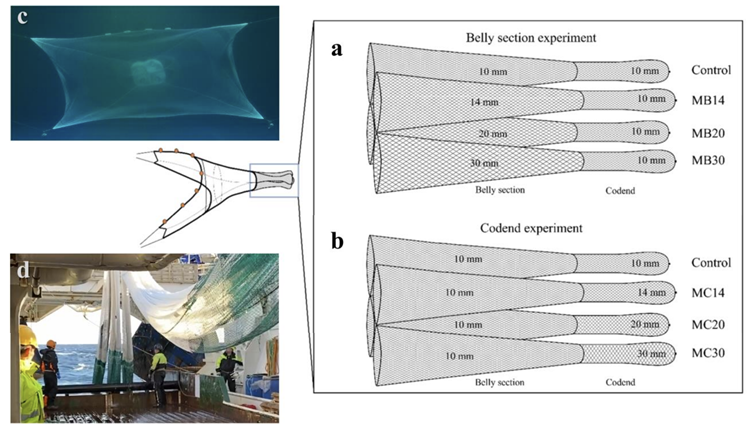
Trawls with large meshes (≥20 mm) were, predictably, inefficient for retaining small mesopelagic fish. Smaller meshes improved catch rates but at the cost of higher drag. A design guide, practical tools that provide rules for selecting key parameters such as mesh size, taper angle, and other gear features, was developed from this study to help gear designers balance trade-offs when designing trawls for future mesopelagic fisheries and adapt them to the species targeted for harvest.
Calanus
Not only mesh size but also the taper angle influence both catch efficiency and drag. To investigate these effects, we tested nets with different mesh sizes and taper angles in flume tank experiments and examined further the results through live trials on fishing vessels targeting Calanus species.
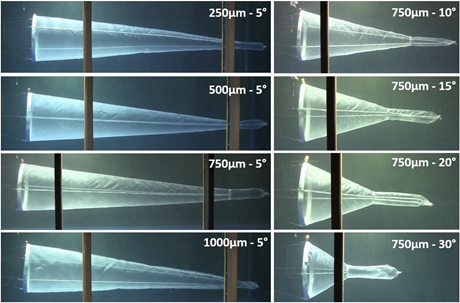
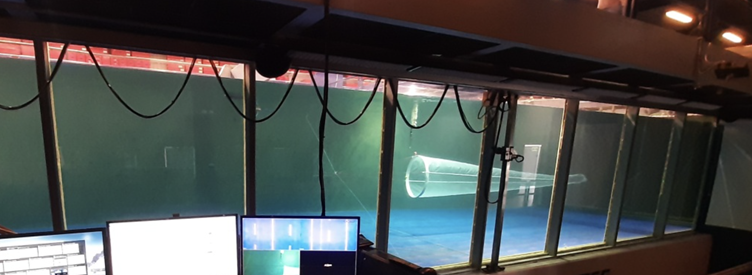
We found that nets with a mesh size around 500 μm and a low taper angle (5°) gave the best balance between drag and catch performance. These results were turned into design guides to support the development of commercial Calanus trawls.
AI-Based imaging in Calanus
For the first time, we developed an AI-based imaging system to automate size measurements of Calanus in selectivity samples. The system rapidly analyses thousands of individuals, greatly improving measurement efficiency, and provides a practical measurement tool for future Calanus harvesting, beginning with the present study. Since Calanus oil content is directly related to body size, this approach is particularly relevant for assessing how gear design influences the retention of the most valuable, oil-rich individuals.
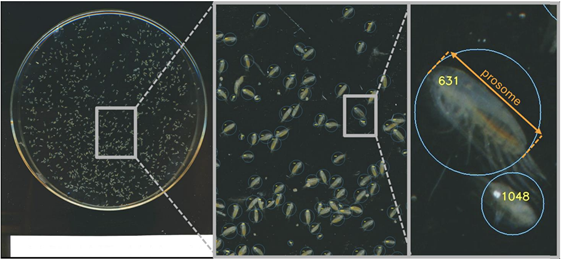
The study quantified how codend mesh size alters the size structure of the retained Calanus population. Smaller meshes (e.g. 500 µm) retained over 90% of individuals across a broad size range, whereas intermediate meshes (750 µm) retained only ~55%, and the largest tested mesh (1000 µm) released more than 99% of individuals. This demonstrates that increasing the mesh size releases the smaller sized Calanus, thus emphasizing the importance of balancing trade-off between catch efficiency and towing drag of fine-meshed trawls.
Interestingly, our (yet unpublished) results indicate that taper angle had no effect on the size distribution of Calanus in the catch. Codends with taper angles of 5°, 10°, 15°, 20°, and 30° retained nearly identical length-frequency distributions, suggesting that unlike mesh size, taper angle does not influence the size selectivity process.
In summary, these studies provide critical insights into the biological and technical challenges of harvesting mesopelagic fish, krill, and Calanus in Norwegian waters, while also pointing to practical solutions that can improve efficiency and sustainability. A next step is to move beyond small-scale experiments and test full-scale commercial trawls, including advances in netting materials, new hydrodynamic designs, and sensor-based catch monitoring. Such developments will be essential for improving catch and oil quality, thereby ensuring that industry and policymakers have the evidence needed to support sustainable exploitation of these alternative marine resources.
This research was done as part of the Centre for research–based innovation SFI Harvest.




Comments
No comments yet. Be the first to comment!