Spruce wood will be used as the main fuel in GAFT, and has a low content of ash that melts at a rather high temperature. Mixing of the spruce wood with different additive fuels is an efficient way to increase the amount of ash and especially certain ash elements that will contribute to a reduction of the ash melting temperature.
Studies
Intensive experimental work and analyses have been done for studying the melting behaviors of spruce wood and its mixtures with three different additive fuels, constituting of bark, forest residue and Ecopro digested residue.
The ash fusion results showed that the melting temperature of the spruce wood ash can be considerably decreased upon mixing with the three tested additive fuels.
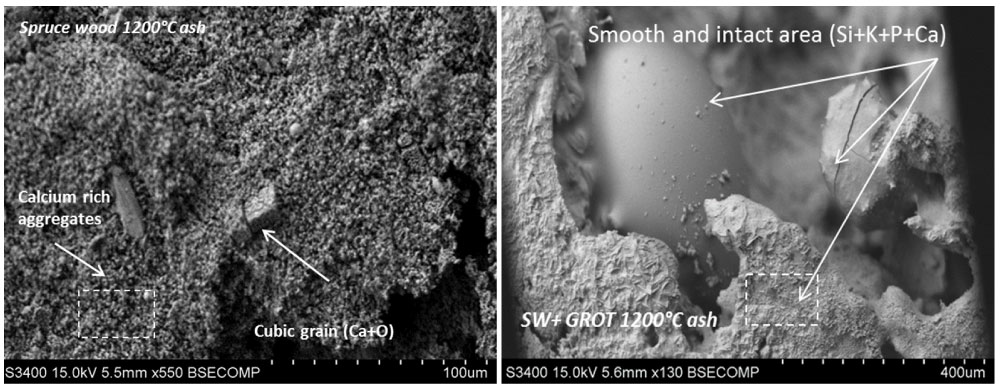
Detailed SEM-EDX analyses were carried out to study the microstructure and microchemistry of ash residues obtained from sintering tests performed at elevated temperatures. The SEM-EDX revealed that at 1200 °C, the spruce wood ash had loose structure and contained mainly agglomerated calcium-rich particles and grains. However, the ash from the mixture of spruce wood and forest residue had already melted at 1200 °C and appeared to have a clear fused structure. The EDX analyses results showed that the melted ash fraction contained significant amounts of K, P and Si. These elements are mainly coming from the forest residue and their presence enhanced the formation of low temperature melting materials and the fusion of the ash consequently.
Presesntation of results
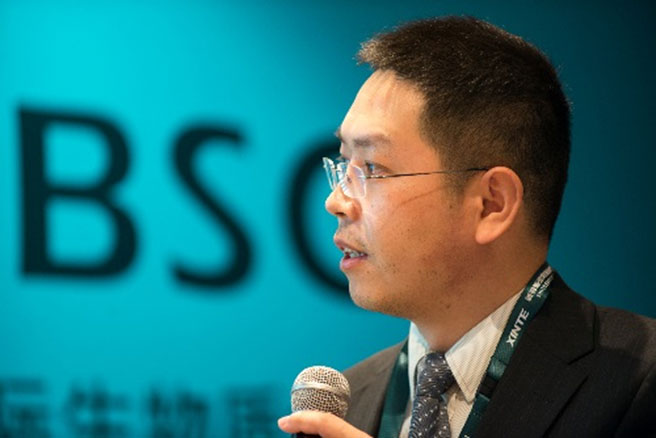
The above-mentioned results were presented by the research scientist Liang Wang from SINTEF Energy Research at the Second International Bioenergy Conference and Exhibition (IBSCE 2017), which was held in Shanghai, China, on the 19-21 of April, 2017.
The IBSCE is a leading conference series and platform bringing together field experts, academics and business innovators to promote development of bioenergy as a valuable economic source in Asia and beyond. In the technical session named Research in the Gasification Technology and Ash Chemistry, the results from the SINTEF-led project GAFT were presented. The title of the presentation was: “Ash Fusion Characteristics of Spruce Stem Wood and Blends with Bark and Forest Residue”.







Comments
No comments yet. Be the first to comment!