Could the chloride process replace the Hall-Héroult process in aluminium production?
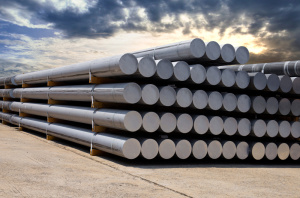
At present, the Hall-Héroult process is universally used in the production of aluminium. It is an electrolytic process in which aluminium oxide is dissolved in molten cryolite (Na3AlF6) and then reduced electrolytically to aluminium at a temperature of around 960°C. The process uses carbon anodes that are consumed during the electrolysis, forming CO2. Aluminium oxide (alumina) is produced from bauxite, an alumina-rich clay mineral, by means of the Bayer process.

3 Comments